I’m a sucker for old photos. Thank you Christie!. (full press release after the jump)
DO NOT GIVE WAY TO EVIL: Photographs of the
South Bronx, 1979 – 1987
by Lisa KahaneNEW YORK CITY/
PHOTOGRAPHY
HC, 11 x 8.25 inches
136 pages
56 four-color images and
59 duotone photographs
ISBN:978-1-57687-432-5 $35.00
powerhousebooks.com
Do Not Give Way to Evil:
Photographs of the South Bronx, 1979 -1987
By Lisa KahaneA Miss Rosen Edition
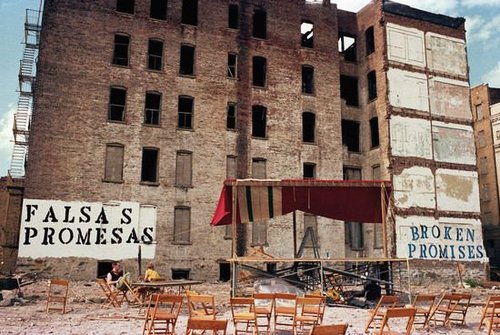
The Bronx had almost stopped burning by 1979. The intensity and extent of the devastation permeated the landscape. It was an awesome mess, not just another neighborhood, but another realm, visible but incomprehensible. The Bronx came undone in a confluence of unfortunate circumstances: the life cycle of community, rampant city planning, economic change, racism, poverty, failed hopes, drugs, crime, abandonment, counterproductive government response. It was destroyed for profit. The entire story has yet to be told.
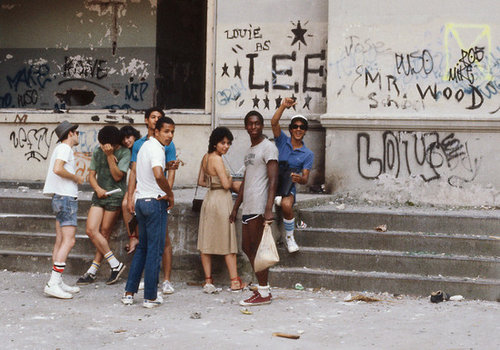
A friend suggested to photographer Lisa Kahane that she record it for a time when it would be a memory, which was then impossible to imagine. The ruins of the immediate past overwhelmed any idea of a future. Ironically, Kahane had a good time in the Bronx. People smiled and said, “Throw me a photo!” Few objected to having their picture taken and no one tried to take her camera away. They wanted their story told. Any discomfort the camera might inflict was nothing compared to what they’d endured.
The result, Do No Give Way to Evil: Photographs of the South Bronx, 1979-1987, is an extraordinary document of devastation and rejuvenation, as Kahane records the first seeds of rebuilding. Throughout this desolate world, the people live alongside abandoned buildings and debris-strewn lots, carrying on their business with civic pride. Though the buildings may be ghosts of their former selves, the spirit of the people holds strong.
With an essay by Peter Frank and text by the photographer, John Ahearn, CRASH, DAZE, Jane Dickson, Stefan Eins, John Fekner, Joe Lewis, SHARP and Rigoberto Torres.
ABOUT LISA KAHANE:Lisa Kahane, a working photographer for over 25 years, specializes in documentary work and portraiture. She publishes worldwide in trade and consumer magazines, newspapers and books. A native New Yorker, educated at Barnard College, Columbia University and The New York Studio School, she has worked on location in western and eastern Europe and Central and South America. During the 90’s she photographed the impact the wars in Yugoslavia had on ordinary lives. In addition to solo shows depicting art and culture in New York City in the 80’s, her work was included in The Downtown Show at The Grey Art Gallery, featured in Urban Mythologies at the Bronx Museum and included in documentation for The American Century at The Whitney Museum. Her photographs are in private collections as well as the permanent collection of the New York Public Library, the Fales Library at NYU and the Library of Congress. With support from the Hudson River Museum and a private foundation, she runs a photography workshop for kids at risk.