Writing for the NYTimes, Jon Caramanica keeps it factual and reflective with no reference to he who shall not be mentioned. Link
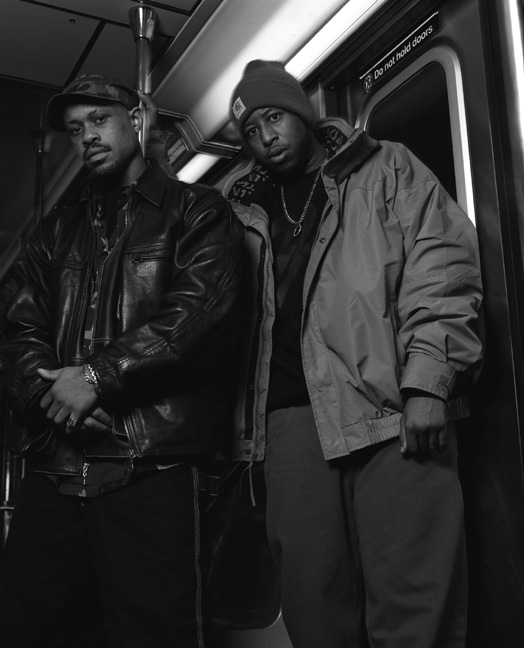
Together, Guru and DJ Premier made archetypal East Coast rap, sharp-edged but not aggressive, full of clear-eyed storytelling and suavely executed, dusty sample-driven production. In the early 1990s, as hip-hop was developing into a significant commercial force, Gang Starr remained committedly anti-ostentatious. As a lyricist, Guru was often a weary moralist weighed down by the tragedy surrounding him, though the group’s music was almost always life-affirming, never curmudgeonly.
From a young age, Guru had been “creative like crazy,” his sister Tricia Elam said. “Dynamic and curious, eager and ambitious.” But his artistic impulses didn’t neatly line up with his middle-class upbringing.
Guru’s father, Harry Elam, was the first black judge in the Boston municipal courts, and his mother, Barbara, was the co-director of library programs in the Boston public school system. Before beginning his rap career in earnest, Guru graduated from Morehouse College in Atlanta in 1983 and took graduate classes at the Fashion Institute of Technology in Manhattan. He worked briefly as a social worker.
Leaving school to pursue a rap career flummoxed his family, said Guru’s brother, Harry Jr. “I was on my way to becoming a professor, and my brother is dropping out of grad school, and I’m saying, ‘What are you doing?’ But he believed in it and followed it through.”
Sarah Rodman’s piece includes quotes from past collaborator Branford Marsalis and author Brian Coleman.
Marsalis, whose work appeared on two of the “Jazzmatazz” releases, remembered Elam today as a “very creative guy” and if not the most technically gifted rapper, a unique one whose style worked perfectly in the idiosyncratic Gang Starr framework.
“The group itself had a sound, and you really couldn’t imagine any other rapper” but Elam rhyming on top, Marsalis said. “It’s like Keith Richards. Nobody is going to remember him as the world’s greatest guitar player, but when you needed an iconic lick for you song, he’s your guy. That’s what Guru did; his sound really set it off.”
Brian Coleman, a Boston-based author of the hip-hop compendium “Check the Technique,” said he considers Gang Starr to be in the top tier of rap groups, even though the duo didn’t attain the multiplatinum status of some who followed its lead.
“In a weird way he was a brag rapper with humility,” Coleman said. “The way that Guru rhymed, it was never on a pedestal. They just had that kind of an impact where anyone who ever heard them could never really think about approaching a song the same way after that, and that’s the sign of a truly legendary, ground-breaking group.”